Biography
Giorgi Mkurnalidze-Cornaro
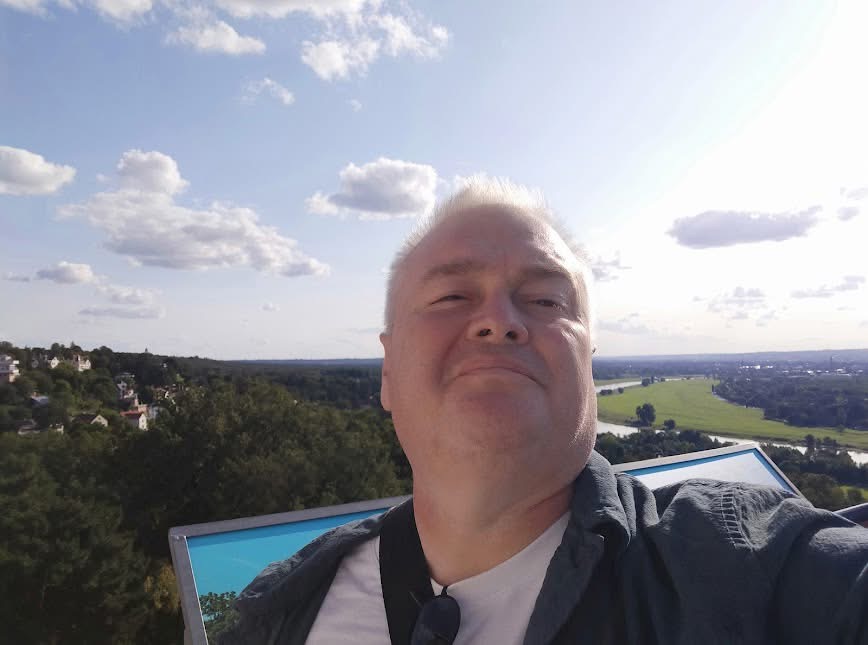
Self-taught Georgian artist · Political scientist · Author · Researcher · Lecturer
Born 7 January 1972 in Tbilisi, Georgia. Education: political scientist, historian, jurist. Self-taught (independent) artist working in painting.
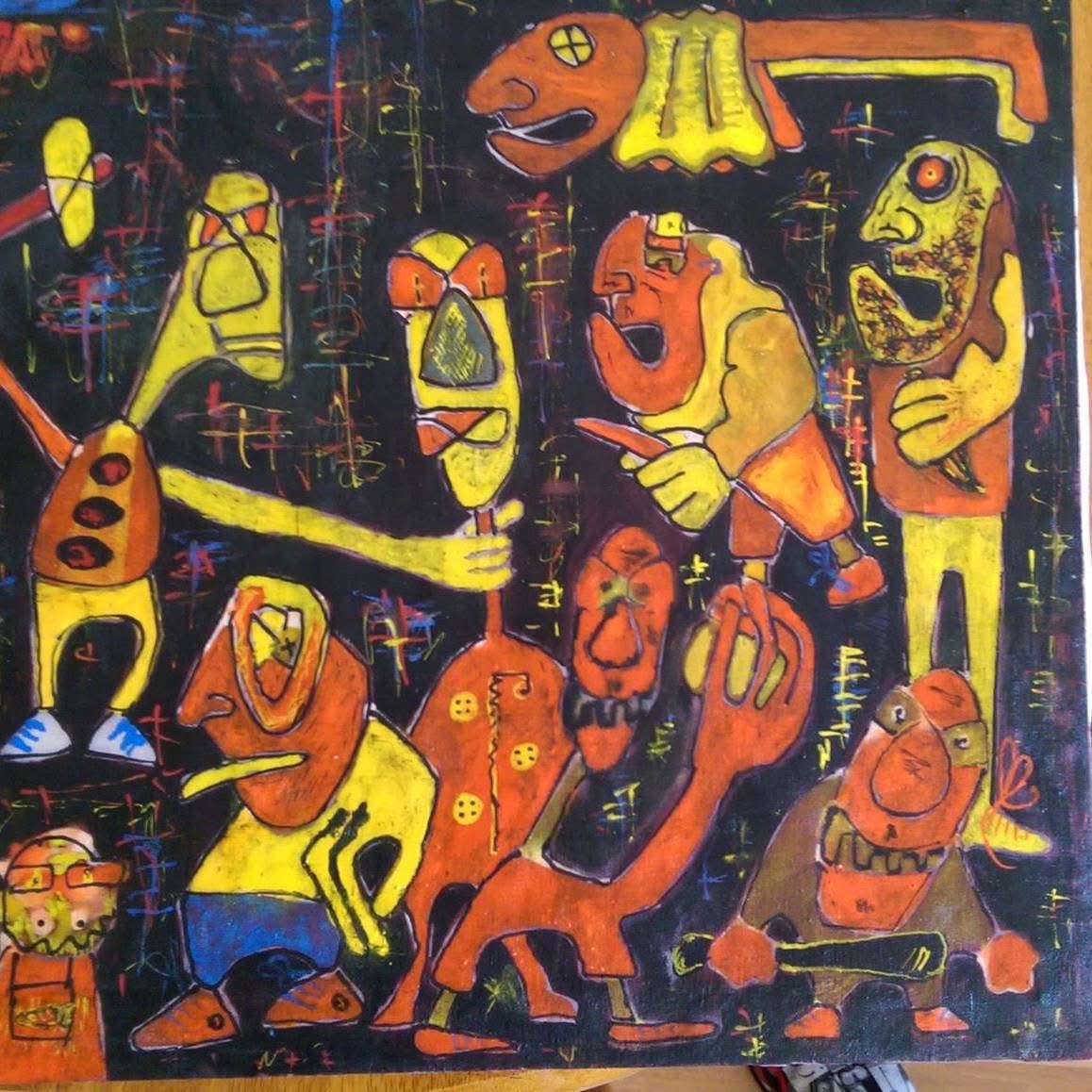
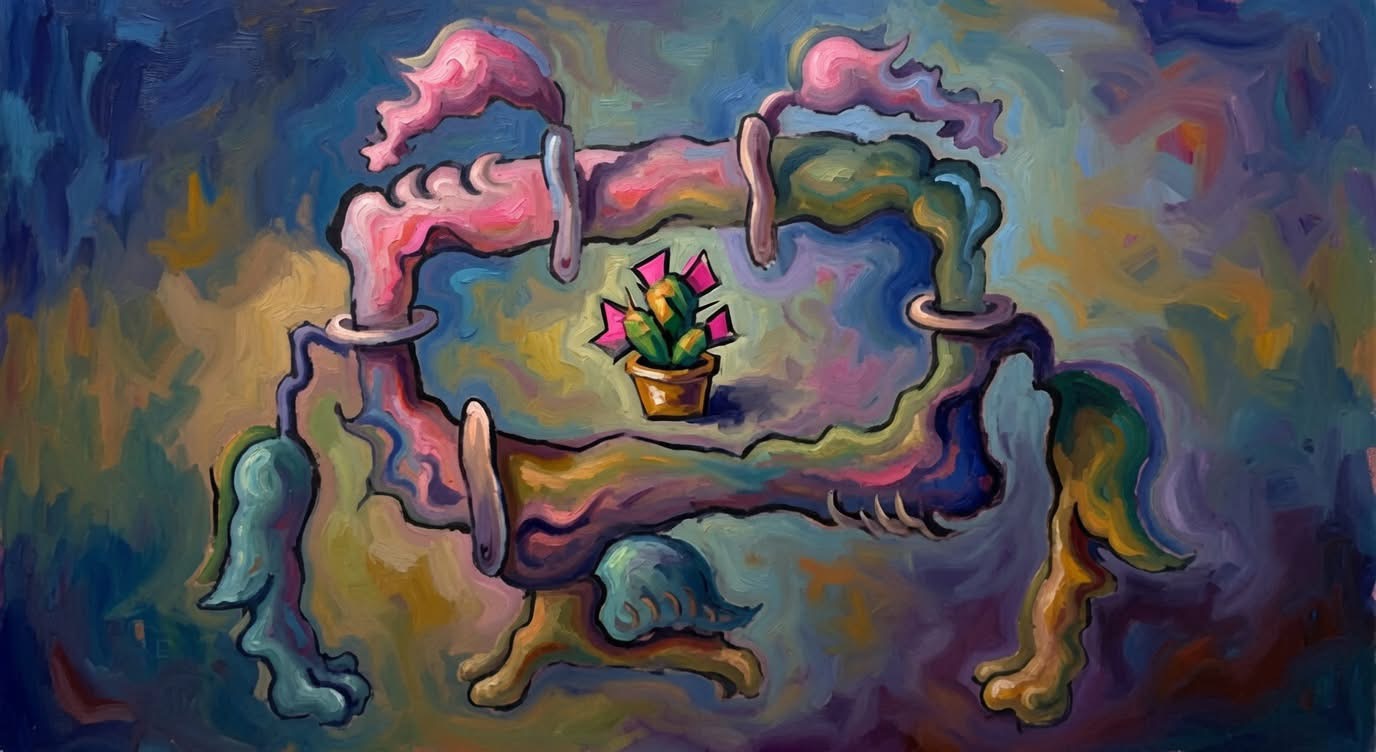
Technique and materials: he works with both traditional painterly methods and mixed media, and does not shy away from experimental research — developing unique techniques that belong to him alone. He uses oils and water-based paints on canvas and cardboard, preparing his own individual grounds.
Solo exhibitions: “Position”, Goethe-Institut, Tbilisi (2003); “Number 29”, Exhibition Hall of the National Parliamentary Library of Georgia, Tbilisi (2001); “Relict B”, Art Gallery Vake, Tbilisi (2018).
Group exhibitions: with Zura Apkhazashvili and Kakhaber Demuradze, Gallery “Hobby”, Tbilisi (2002); “Interpretations on Lucas Cranach — The Matchmaker”, Goethe-Institut, Tbilisi (2003); Exhibition of Contemporary Georgian Artists, Shalva Dzneladze Museum, Tbilisi (2024).
A time capsule and an emotional landscape. A prominent figure in the Georgian contemporary art scene, he consistently explores the depths of human existence and the traces left by time. His works are artefacts that narrate the interconnectedness of past, present and future, where personal experience is placed within a universal frame.
The concept of time and nostalgia. Time is a central concept in his art. Old, time-worn objects and archival material become time capsules that already carry stories, memories and emotional weight. He breathes new life into them, freeing them from their original function and turning them into symbols of what has passed, what has been lost, and the legacy the past leaves to the present. Nostalgia here is not merely grief for what is gone but an inquiry into how the past shapes identity — a foundation for future development, never a conservative sentiment.
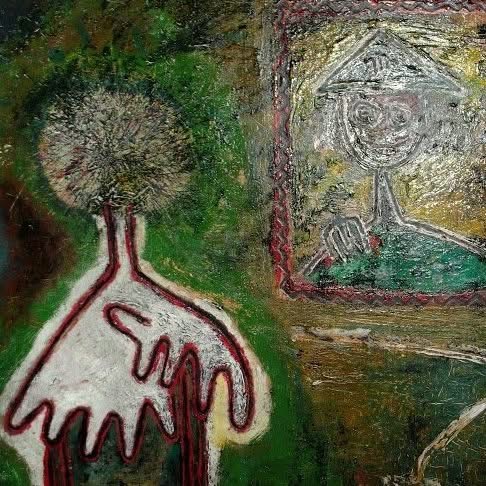
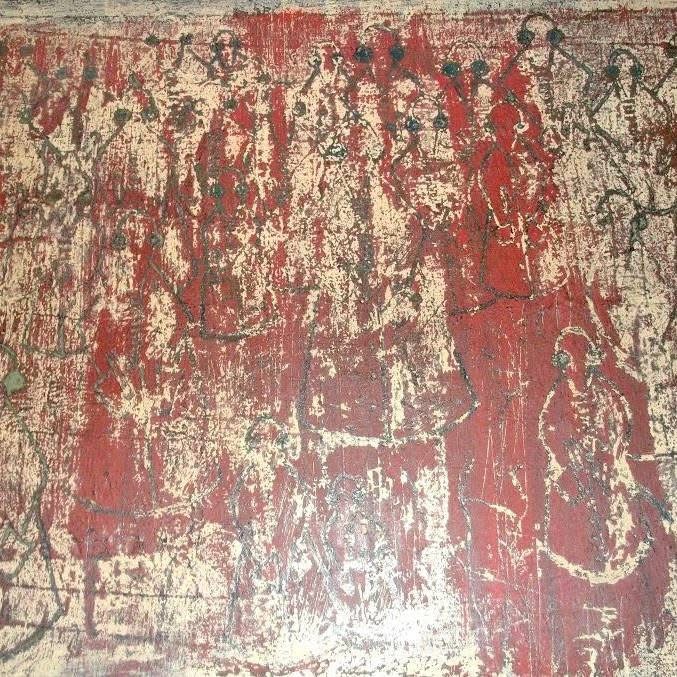
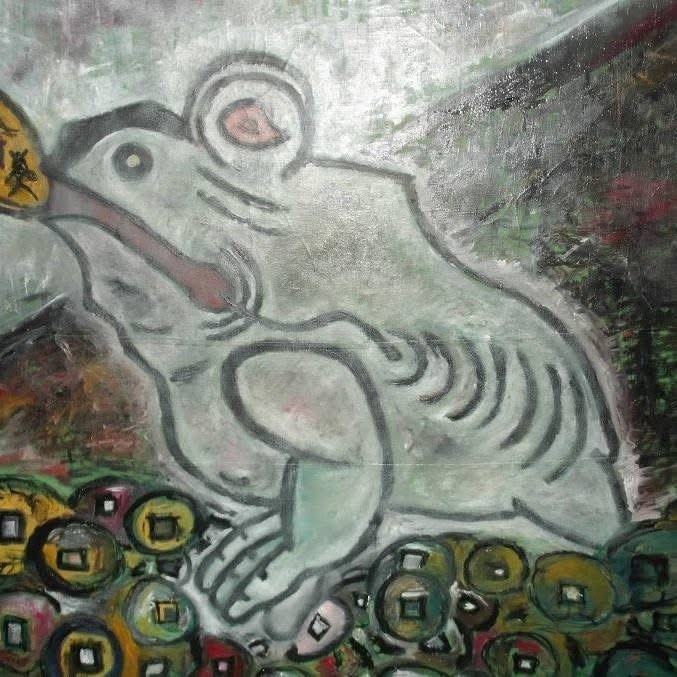
Texture and materiality. The works are distinguished by rich texture and material presence. Wood, metal, fabric, photographs and printed matter are combined into multi-layered, complex surfaces. These textures are not only visual — they carry semantic weight, inviting touch and intensifying the emotional dimension of the piece.
Human trace and archetype. Human presence appears as fragmentary body parts, silhouettes, or objects that indicate a life once lived. Specific individuals are rarely depicted, yet the work is filled with loneliness, love, loss and hope, drawing on archetypal symbols that let each viewer connect their own experience.
Expressiveness and symbolism. The work is deeply expressive — colour, texture and composition amplify inner feeling — yet the expressiveness is controlled and always serves a purpose. Cultural, historical and personal symbols are woven into complex narratives that continue to unfold over time.
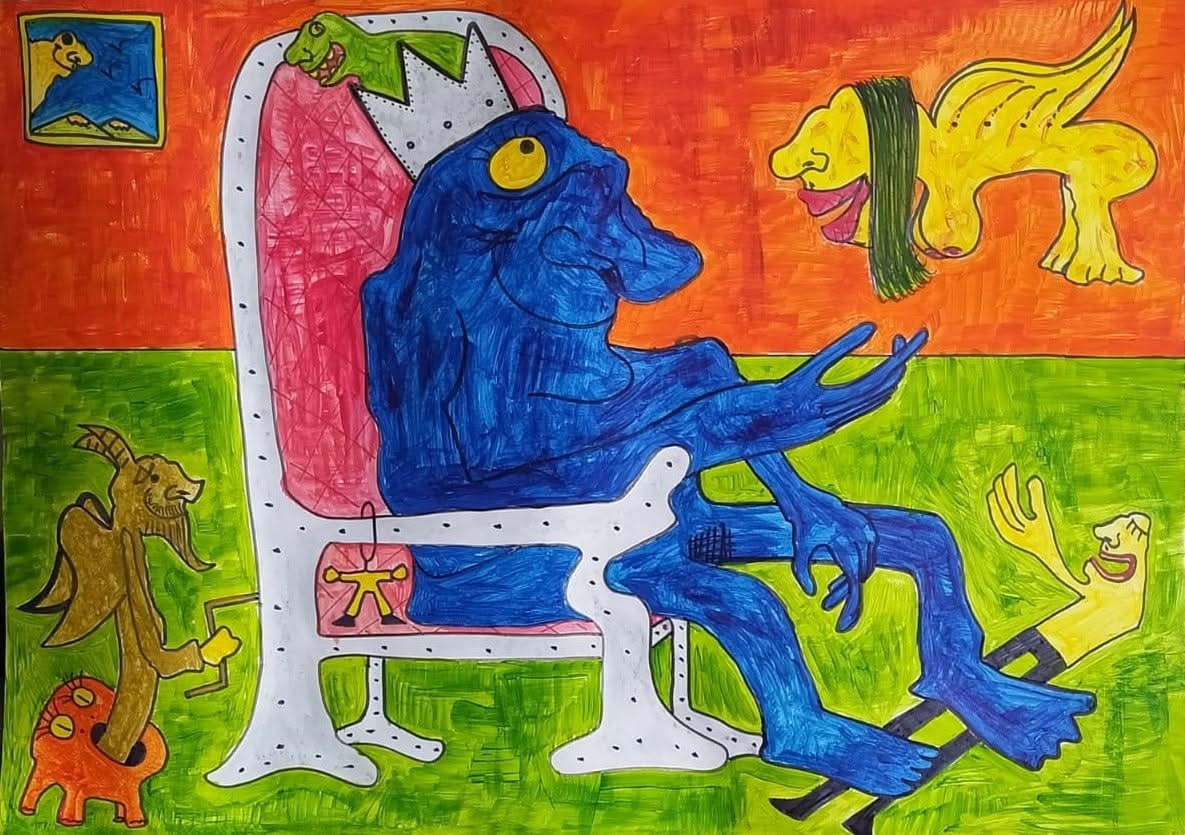
Reading of the works. Executed in mixed media on paper, typically 40 × 60 cm, the paintings play with contrast and paradox. Titles such as “Illustration of a Childhood Apocalypse” or “From Prehistoric Mythology to the Birth of Hell” collide innocence with the darker sides of existence and traverse vast historical arcs. “Constructivism will save us, but first it must die” reflects on the fate of a movement; “Paintings are like fired bullets — I shoot at the target and it is done; this is not a boomerang softened by old sentiment” insists on the immediacy and irreversibility of the act of painting.
Other titles — “Inertia, Gravity, Prognosis — a universal standard for grounding airiness”, “Masquerade — for God’s sake”, “Painted ostrich eggs cannot be sated rolling on your grave”, “Holy Trinity Corporation / Concept: a one-artist gallery”, “A depicted structure tells an abstract story — it does not boast, does not brag, does not miraculously complain, it simply tells an abstract story” — reveal a critical, ironic view of social and religious constructs and a trust that image itself, even in abstraction, can narrate.
In sum, his practice is a dialogue with the past, a reflection on the present and a prognosis for what comes next: a journey into the depths of the human soul, where time, memory and identity intertwine to produce work that is powerful, emotional and aesthetically refined.
“Painting the questions life refuses to answer.”